



Dear Adviser,
My child is in Year 5 at school and we are thinking ahead to next October when we have to apply for a place in high school. Myself and my partner are feeling really overwhelmed and don’t know where to start and I’m terrified that I will pick the wrong school for him and I’m worried that they may not cope in a mainstream school. What can we do to make an informed choice?
I always feel that this is a really difficult question to answer and I would never tell someone which school to choose because what works for my child may not work for your child. I now have two children in high school both with very different needs. It’s important to realise that only you and your child can decide what school is right for them, but there are things you can do to help you choose…
- Look at the schools in your local catchment and surrounding areas, which ones can you get to, if it will add more pressure to your morning routine to drive 20 minutes half an hour to the school of your choice, is it the right one for you?
- Contact the school and see if you can go and visit either by yourself or with your child, a lot of schools now will do SEND tours additional to the open events.
- Contact the SENDCo to discuss your child’s needs and don’t be afraid to ask questions about how they will be able to meet these needs and what that will look like.
- Once you have an Idea of which school you may send your child, take your child to visit the school. It can help to do this after the school day when it is quieter to prevent your child feeling too overwhelmed.
- Once you receive you allocated high school in Year 6, it is important to touch base with the SENDCo to organise a meeting. Yes your primary school will transfer all of the information about your child to the high school, but high schools are receiving a lot of information form a larger number of feeder schools at this point in the academic year. By having a meeting with the SENDCo you can ensure that they have the information that you deem important. It is the perfect opportunity to let them know what your child struggles with, if they mask and so on.
- This sort of meeting can give school a better understanding of how best to support your child whether it is passes to allow them to dodge the busy corridors, take time out of lesson or someone to check in with them throughout the school day and so on.
- Don’t be scared to request additional visits and transitions for your child most primary schools will arrange extra transition sessions with their feeder high school if they feel it will be beneficial to the pupil.
- Most of you will have spoken to your child’s class teacher in primary school as and when issues arise. In high school your child will see multiple teachers throughout the day it is the job of the SENDCo and their team to ensure the teachers know what your child needs. It is their job to hold the teachers accountable for ensuring your child is supported in their classroom.
- Don’t be afraid to get in touch. It’s important to remember that communication is the key, it is easier for the SENDCo or school to manage small issues as they arrive rather than waiting for them to escalate in to bigger problems that are more difficult to manage.
- When leasing with the school it is helpful to have any questions written down and remember to approach school in a positive way. Most of us that are fighting our way through the ‘SEND Jungle’ have had to fight whether that is foe and EHCP, and assessment, a diagnosis etc. We as SEND parents we spend a lot of our time in fight mode so it is important to take a moment and switch to the mind-set of ‘This is my child and they have these needs how can you support us?’ (This can be really difficult to do when you are so used to fighting the system).
- Most importantly speak to your child about their concerns and make their new school aware of these, they may be able to help you and your child feel more comfortable about the change.
- Prepare them during the school holidays take them on the school run, walk it, drive it, and talk through different scenarios so they have thought about what they will do in a certain situation. This will help them to adjust to their new situation.
- If your child struggles with change help them to consider the reality of the change. WE often spend a lot of time worrying about things that we have no control over. But taking time to talk about it you can help your child to manage those worries and show them what they can control about the situation, or even show them that change is not always bad and even when it has been bad we are still ok. There are a number of activities that can be used to help, for example the Circle of control – this is where you look at all of the things that you cannot control and write them in the outer circle, then you start to look at all of the things that you can control.
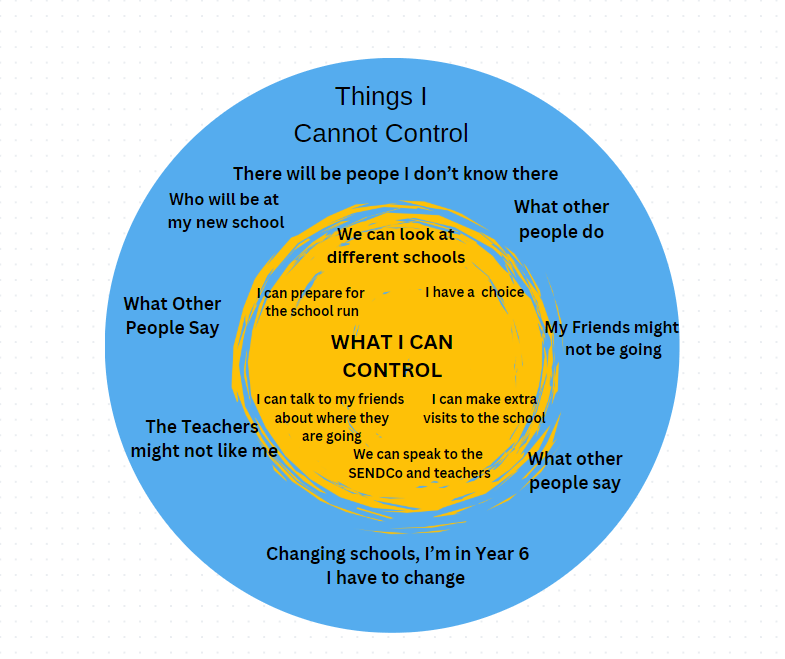
Another activity is the Change Cloud – this can be completed in small groups as well as 1-1. Each person gets a piece of paper or card shaped like a cloud and they are asked to draw or write about a change they have experienced. Once this is done you can ask some reflective questions to help them discuss and think about the changes they have experience.
Suggested Reflection Questions:
- Does it feel like a big or little change?
- Was it an expected or unexpected change?
- Did it happen slowly or all of a sudden?
- Has it been around for a while or did it enter our lives recently?
- What things have changed? What things have remained the same?
- How do you feel about these changes? E.g., scared, worried, unsure, excited, disappointed, angry, sad, curious Note: You can use these resources to help identify different feelings-related words:
- What can we do to help each other right now?
- What do you miss about life before the change?
- What’s scary? What’s exciting?
Useful links:

