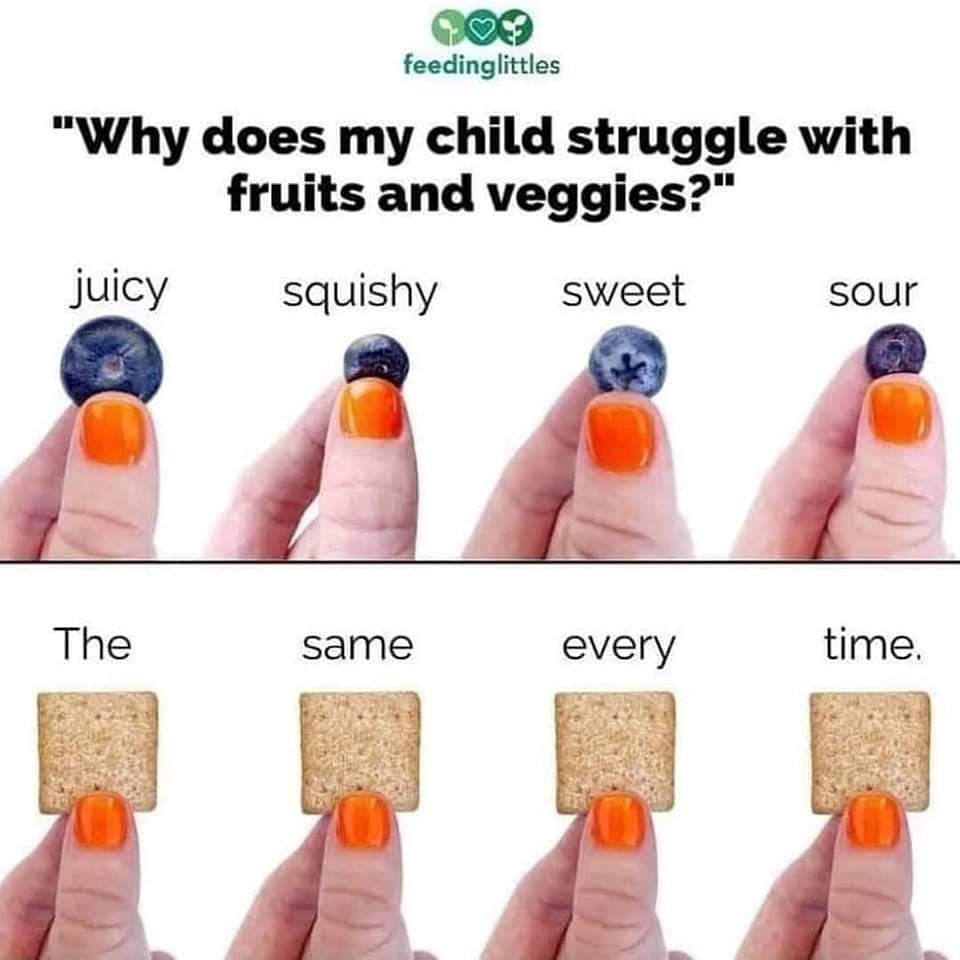
Restricted eating is common in autistic people. Issues such as only eating very few foods, not being able to eat at school, going long periods of time without eating and pica (eating non-foods) can feel difficult to understand and manage. For many autistic people the sensory experience of eating can have an impact on what, when, where and how they eat. Remember your child is not being “picky” and it is important that you understand the root of their restricted eating. As they get older they may want to explore widening their dietary choices, or they may be satisfied with a limited range of trusted foods.
- They may experience Misophonia, sound sensitivity, meaning they experience pain or severe irritation from certain sounds. This can include the sound of others chewing. They may need to eat alone in silence, or wear headphones.
- Foods have different textures, tastes and smells. Some people seek out strong flavours whilst others are repelled by them. Many autistic people eat the same food most of the time or beige foods. They like predictability and small things to you may be a big thing to them- tiny seeds on the outside of a strawberry can make it impossible to eat.
- Some autistic people find the feel of certain materials such as metal painful, so may not be able to use metal cutlery.
- Where they sit may also be important, they may find it overwhelming to have to people watch whilst eating or may find the chair too hard to concentrate on food.
- Going to a restaurant can be difficult as there are too many choices on the menu! It may also be too noisy and there may be unwanted strong smells from other people’s food choices. It can help to enable an autistic person to view the menu before going to the restaurant and to ask to be seated in a quiet area.
- Some autistic people don’t feel hungry or alternatively never feel full. This is all to do with Interoception, the senses inside us that monitor hunger, thirst and when we need to go to the toilet. They may need to be prompted to eat or be helped to control their portions.
- Anxiety for any of us can have a big impact on our appetite, some of us will overeat when stressed and others will have no appetite. Putting pressure on our child or young person to eat will only raise anxiety and make the situation worse. If we are also anxious about their eating or diet then they may also pick up on our anxiety. Try to remain calm around mealtimes and don’t make a big deal of the situation if they don’t want to eat something or at all.
When to be concerned:
The National Autistic Society provides of list of more concerning indicators you should look out for. Generally if a child is continuing to grow and isn’t experiencing frequent bouts of illness then they are getting enough nutrition. Remember that children’s growth fluctuates and we all have different genetic make ups so try not to just use comparison with siblings or peers as a judge of how they are doing. If in doubt
though you should contact your GP who may refer you onto another professional such as a paediatrician, dietician or a mental health service.