


Caring for someone who has experienced a stroke
When someone has a stroke, life can shift suddenly, and family members often find themselves stepping into a caring role overnight. We offer support to help you navigate these unexpected changes, understand what’s happening, and find the right help at the right time.

What is a stroke?
A stroke happens when the blood supply to part of the brain is cut off. This can damage brain cells and affect how the body works, as well as how someone thinks, feels, or communicates.
There are three main types:
- ischaemic stroke (caused by a blocked blood vessel),
- haemorrhagic stroke (caused by bleeding in or around the brain),
- transient ischaemic attack (TIA), a mini stroke.
Anyone can have a stroke, including younger adults and children. The effects and recovery vary depending on the part of the brain affected and the size of the stroke.
Recognise a stroke: FAST!
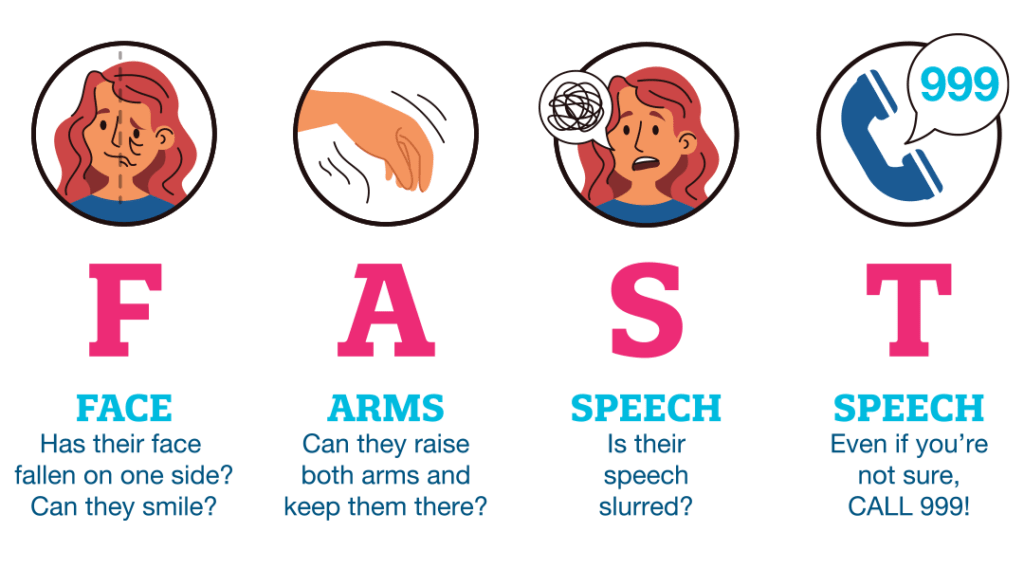
Think and Act F.A.S.T.
If you see any single one of these signs of a stroke:
- Face– has their face fallen on one side? Can they smile?
- Arms – can they raise both arms and keep them there?
- Speech – is their speech slurred?
- Time – even if you’re not sure, call 999.
When Stroke Strikes Act F.A.S.T. Call 999
Becoming a family carer
When a person has a stroke, a family member or friend may suddenly become a family carer. This role may be temporary or long term, depending on the individual’s prognosis and, where appropriate, in collaboration with the therapy team.
During this time, you may experience a range of emotions, such as shock, worry, anxiety, sadness, frustration, or feeling overwhelmed, as you adjust to new responsibilities and changes in daily life.
Caring can be challenging, and taking care of yourself helps you care for someone else. Try to take breaks whenever possible, stay in touch with friends and family, talk to people who understand, like carers’ groups or trained volunteers, and seek professional help if you feel low, anxious, or stressed.
Recognising your own needs is just as important as supporting the person you care for.
Information and support that might be useful
You should be involved in planning the care needs of a person who has had a stroke when they return home. Some people may be eligible for Early Supported Discharge (ESD), which allows them to leave hospital sooner and continue their rehabilitation and therapy at home with support from a specialist team.
There are national and local services who are well equipped to support you and your family following a stroke.

The UK’s leading charity providing support for all stroke survivors and their families. “With strength, determination and the right support, recovery is possible.”

National organisation helping working-age stroke survivors and their families in the UK to reclaim their lives through active peer support.

Local organisation offering advice, support, rehabilitation and support services to people over 16 who have, sustained a brain injury (including stroke).
We offer support helping you navigate your caring role. This includes workshops to help with confidence and improvement in wellbeing, respite passes for local attractions and funded respite options. We also support Suffolk County Council with completing carer’s assessments to help identify what you need to help in your caring role.
Carers Assessments
Respite and Short Breaks
Needs Assessments
Workshops

We are here
Caring for someone after they have had a stroke can feel overwhelming, and you do not have to manage this alone. Suffolk Family Carers provide emotional support, guidance, and information to help you in your caring role.
We can talk through your worries or questions, help you make sense of what is happening, and support you to find ways forward that feel right for you. We can also advise on support services, including respite and local resources, and help you connect with carers’ groups and activities. Help is available to make caring more manageable and to support your own wellbeing.

